
Previous exhibition
Wael Shawky – The Crusades and Current Stories

About the exhibition
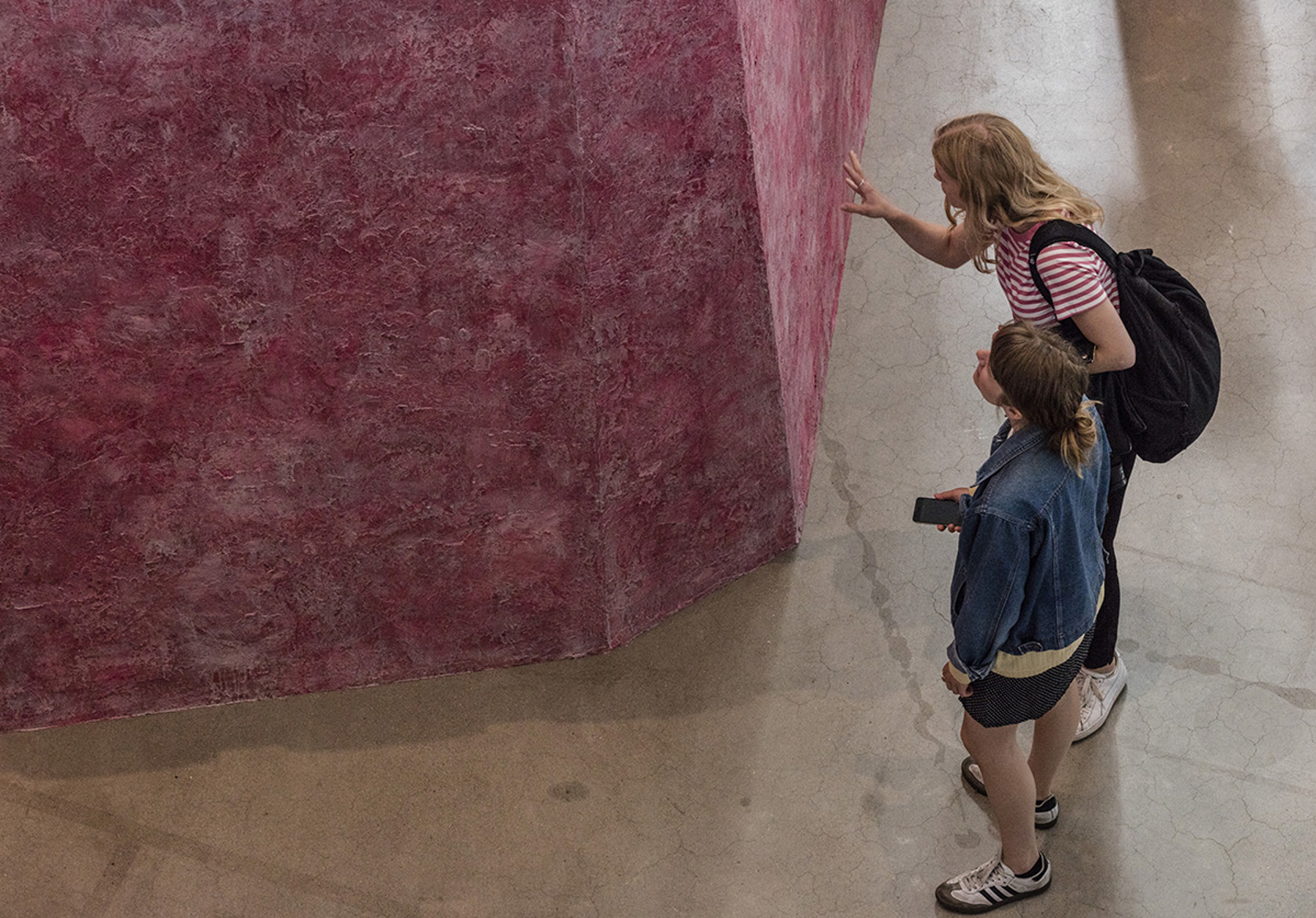
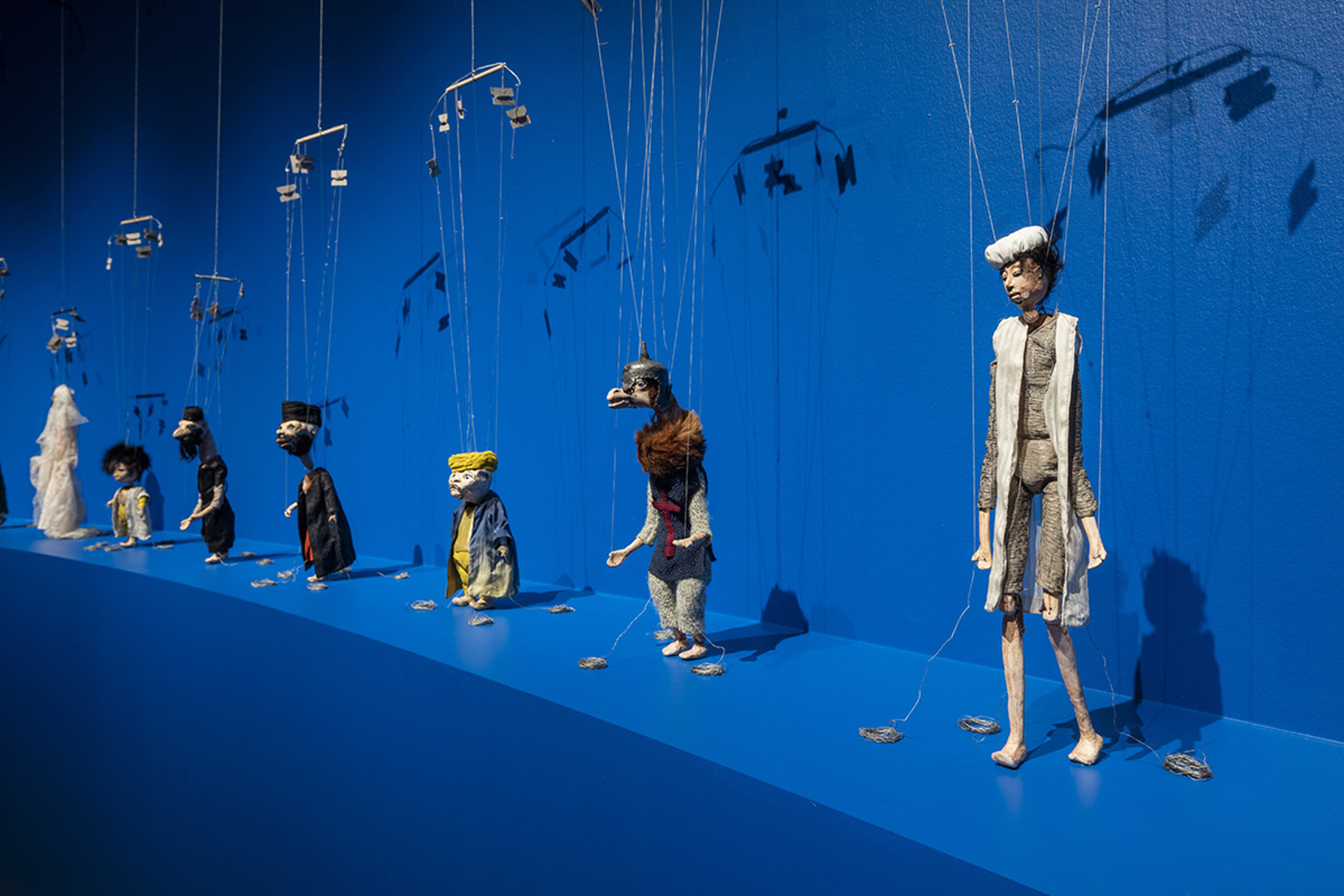
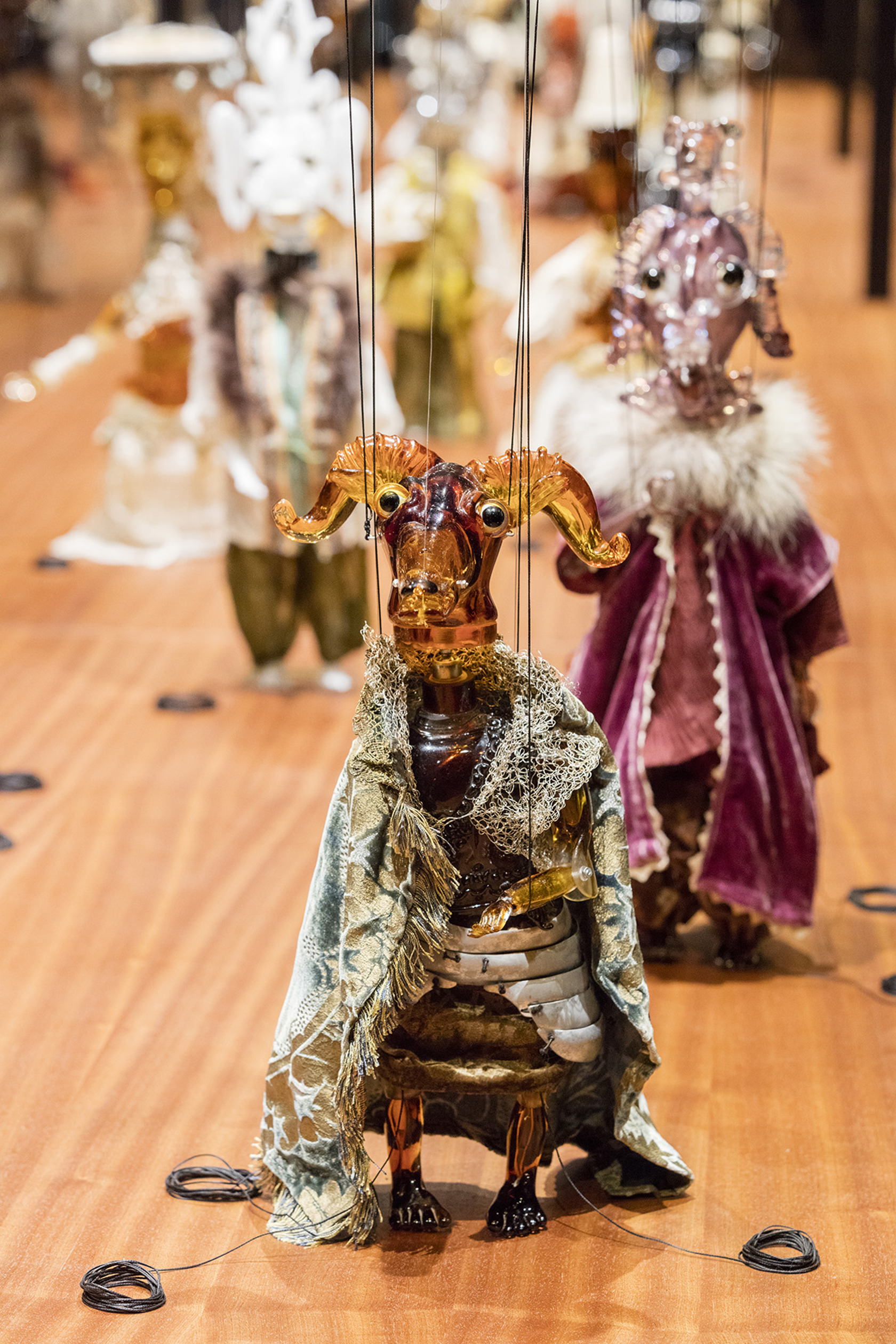
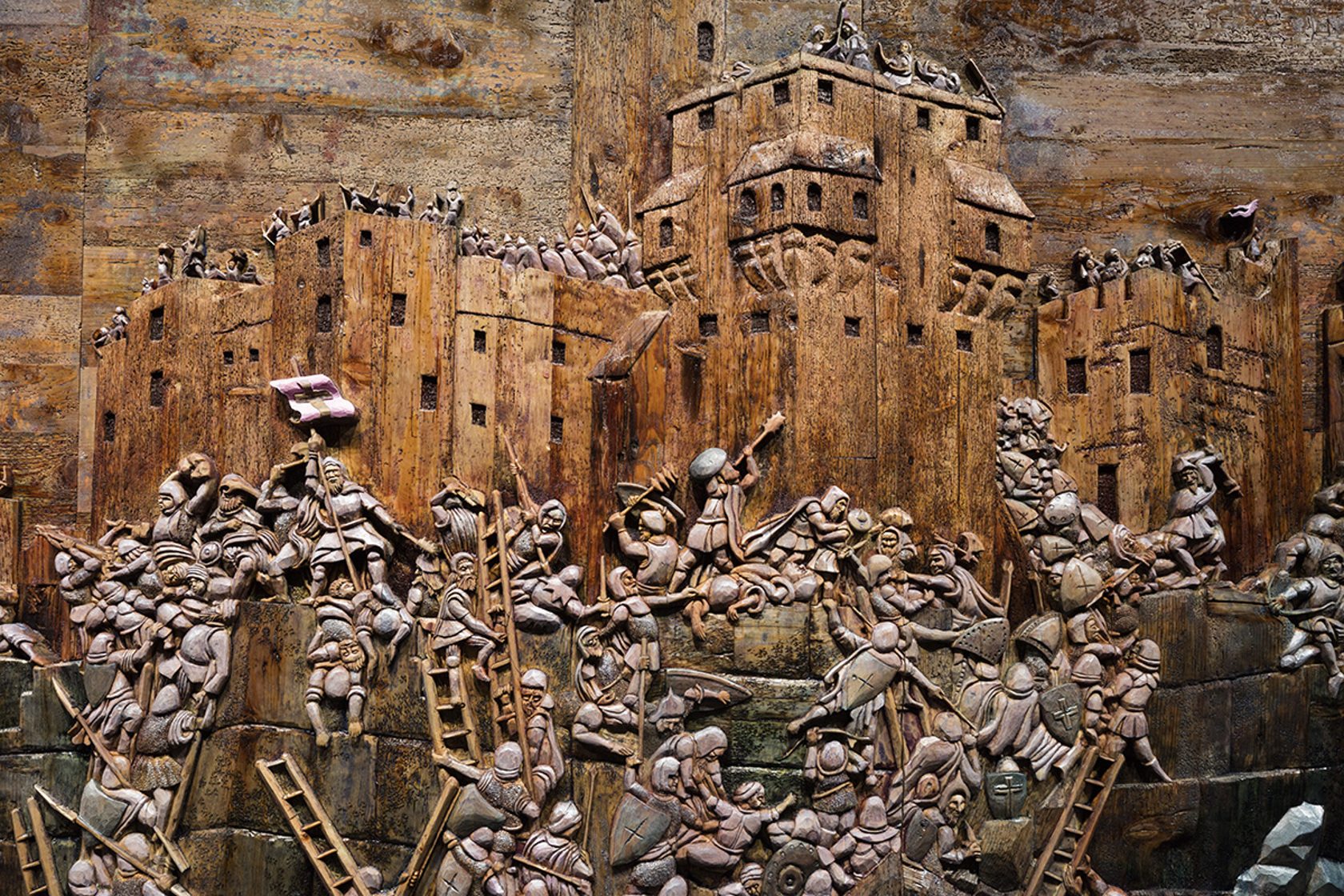
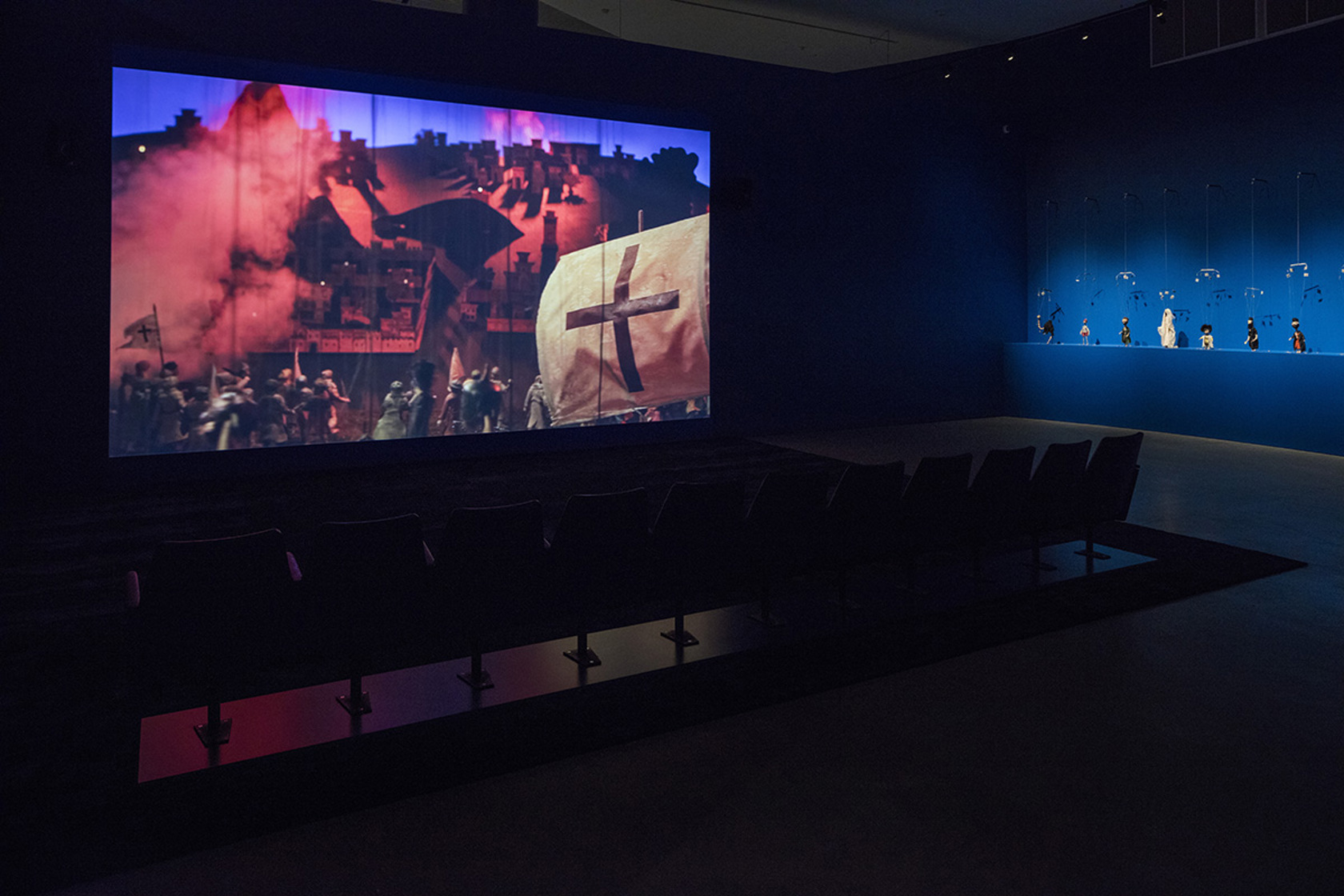
At the centre of the exhibition featuring Egyptian artist Wael Shawky is the film trilogy Cabaret Crusades, Shawky's famous puppet films, which is being shown for the first time in Denmark. In addition, the exhibition presents a rich selection of other works, including the puppets used in the films, large wooden reliefs, drawings, photographs and collages - as well as a brand new site-specific work in the form of a 50-metre long wall.
At the centre of the exhibition with Egyptian artist Wael Shawky is the film trilogy Cabaret Crusades, Shawky's famous puppet films, which are being shown for the first time in Denmark. In addition, the exhibition presents a rich selection of other works, including the puppets used in the films, large wooden reliefs, drawings, photographs and collages - as well as a brand new site-specific work in the form of a 50-metre long wall.
The films are a re-enactment of the medieval crusades in the Middle East, but from an Arab perspective. Using original historical sources and puppets, Shawky re-enacts the historical events of the distant past with the complicated relations between the West and the Middle East at its centre. He depicts a past characterised by violent conflicts and clashes that still affect the relationship between the West and the Middle East today, giving us the chance to see both the Crusades and the present in a new light.
The exhibition is accompanied by a fully illustrated catalogue in Danish and English, including an interview with the artist, texts close to the work, and an article by Islamic scholar and expert in Middle Eastern history, Jørgen Bæk Simonsen, who looks at Shawky's art and the issues his works raise in a new light.
Crusade without heroes
Shawky's film theatrically depicts a series of historical events in chronological order; from Pope Urban II's sermon that launched the First Crusade in 1095 to the destruction of Constantinople in 1204. Although several of the central characters, such as the Muslim commander Saladin and the King of England, Richard the Lionheart, are hailed as heroes in many legends today, there are no heroes in Shawky's film. No one is unambiguously good or evil.
The puppets are dressed in oriental clothing and knightly costumes. They perform in front of Arab and European backdrops. Although conspiracies, murders and massacres set the tone, the puppets help make the story of the Crusades less dramatic. They represent us humans and are subject to the threads and systems that control them, as an image of the hidden power of society. But who constitutes that hidden power? Shawky raises this question not only in relation to medieval power systems. By raising the same question today, he draws a parallel from then to now.
Reality vs. myth
In the large wooden reliefs, Shawky has based his work on historical paintings from Europe from the 16th and 19th centuries. In general, he takes a critical approach to the way historical events have been retold. In the tree reliefs as well as in the films, he often adds mythical elements to show us how historical retellings of the past are often distorted or untrue.
The musical part of the trilogy is therefore also an important element, as a deliberate mix of different genres; from songs of Arabian pearl fishermen to Egyptian electro music. This gives the films the character of an entertaining cabaret with elements of power criticism.
About the artist
Wael Shawky was born in Alexandria, Egypt in 1971. After graduating from the Alexandria Academy of Fine Arts in 1994, he travelled to Philadelphia, USA for an MFA. Since his breakthrough at Documenta 13 in 2012, he has achieved great recognition and success worldwide.
Reviews
Århus Stiftstidende
Jyllands-Posten
A refreshing entry into the multi-ethnic discussion space
Weekendavisen
...a fabulous exhibition that should be experienced first-hand
Magasinet Kunst
Special thanks to
Statens Kunstfond
Konsul George Jorck & hustru Emma Jorck's Fond
Spar Nord Fonden